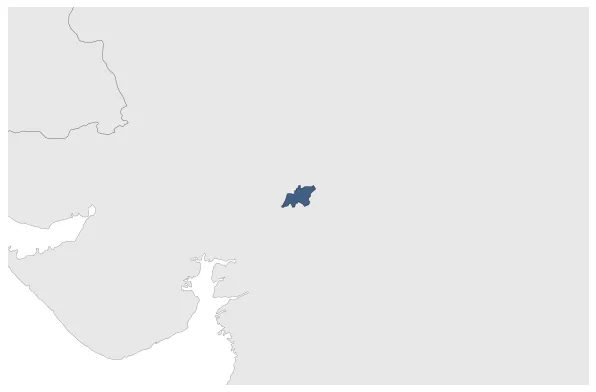
sant state
If you are looking for the page with the statistics about this nation you can find it here: All Statistics
The cluster includes all the forms of the country.
The cluster includes the following incarnations of the same nation:
Sant State
Sant State (Princely State)
Establishment
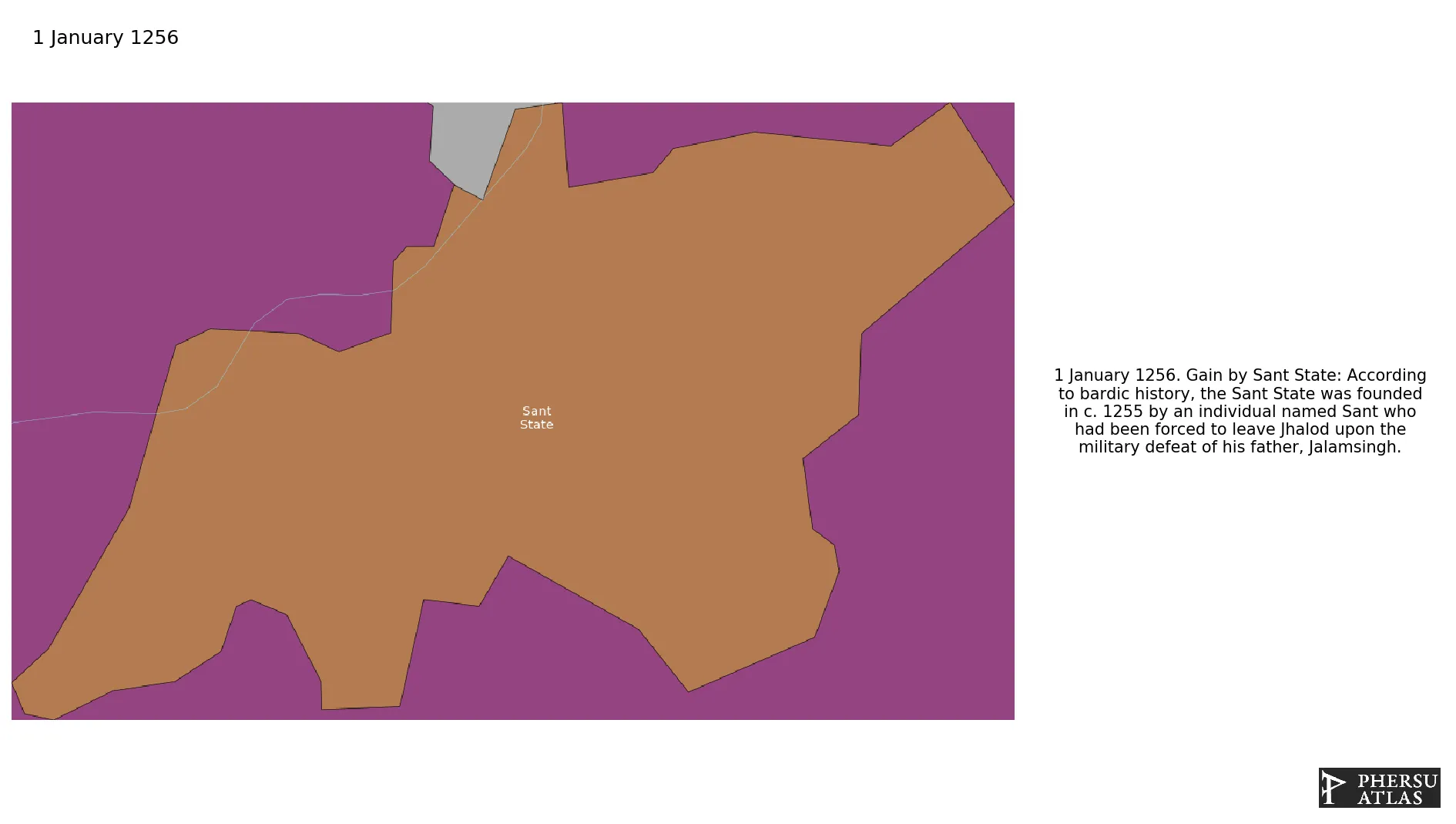
January 1256: According to bardic history, the Sant State was founded in c. 1255 by an individual named Sant who had been forced to leave Jhalod upon the military defeat of his father, Jalamsingh.
Chronology
Interactive Chronologies with maps are available in the section Changes Navigation
Was the partition of British India in two independent entities: India (with a Hindu majority) and Pakistan (with a Muslim majority). This included the several princely states that were dependent on the British Colony.
October 1948: Accession of Sant State to India.
January 1754: In 1753, The Maharawal of Banswara State, killed the three sons of Rana Ratansinhjii and tried to capture the throne of Sant State; the fourth son who was an infant named Badansinghji was hidden by Kolis of Malwa and grew up in a Koli family. The Maharawal annexed the Sant State in Banswara State and established his army in Sant.
January 1801: After several years, when Badansinghji reached maturity, the Kolis of Malwa attacked the army of Banswara. The Khant Kolis of Malwa defeated the army of Maharawal and threw it out of Sant state. After that, Kolis of Malwa established Rana Badansinghji Pawar at the throne of Sant State.
October 1819: Sant State was party to an agreement between Scindia and Lunawada mediated by the British, which effectively made the state a British vassal.
Disestablishment
October 1948: Accession of Sant State to India.