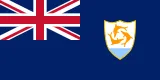
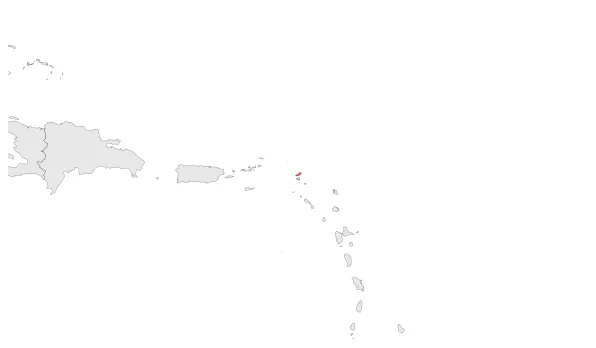
anguilla
If you are looking for the page with the statistics about this nation you can find it here: All Statistics
The cluster includes all the forms of the country.
The cluster includes the following incarnations of the same nation:
Anguilla (Netherlands)
Anguilla (Great Britain)
Anguilla (France)
Republic of Anguilla
Establishment
January 1632: The Dutch West India Company, under the leadership of Peter Stuyvesant, established a fort on the island of Anguilla in 1631. This marked the beginning of Dutch colonization in the region, with Anguilla becoming a territory of the Netherlands.
Chronology
Interactive Chronologies with maps are available in the section Changes Navigation
Was a revolution in England and Scotland that led to the deposition of Catholic King James II.
November 1688: By November 1688 William of Orange, who was Stadtholder of the Netherlands, and his wife Mary, were in control of England and Wales. They would later become King and Queen of Great Britain.
January 1634: The territory of Anguilla fell under Spanish control in 1633.
January 1651: In 1650, British colonization of Anguilla began, marking the territory's transition to becoming part of Great Britain.
January 1667: French occupation of Anguilla.
July 1667: Anguilla returned to English control under the terms of the Treaty of Breda.
March 1702: As William III of England was also the de facto ruler of the Dutch Republic (as Stadtholder of Holland, Zeeland, Utrecht, Guelders, and Overijssel in the Dutch Republic), the Personal Union between Netherlands and Great Britain ended at his death.
January 1883: Anguilla was federated with St Kitts and Nevis in 1882.
July 1967: The Republic of Anguilla was a short-lived, unrecognised independent state on the island of Anguilla.
March 1969: British authority was restored on Anguilla.
January 1972: Anguilla separated out of this arrangement, after an armed raid on Saint Kitts.
Selected Sources
Israel, J. I. (1995): The Dutch Republic: Its Rise, Greatness, and Fall, Clarendon Press, pp. 959-960