If you are looking for the page with the statistics about this polity you can find it here:All Statistics
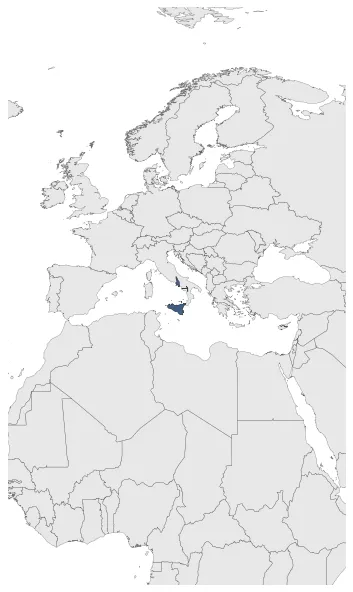
Were the territories controlled by Giuseppe Garibalid and his volunteers during the Italian Wars of Independence.
Establishment
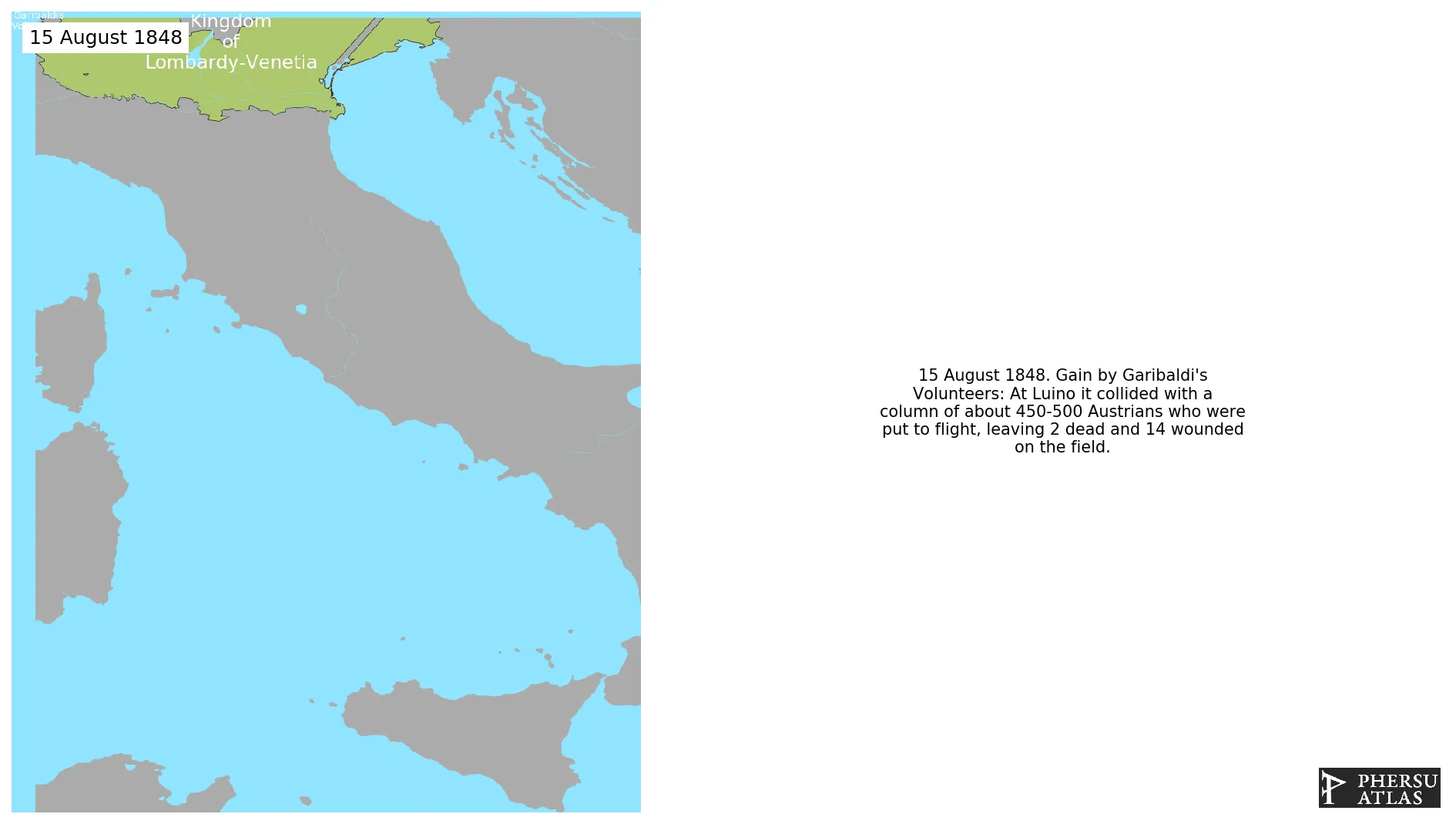
August 1848: At Luino it collided with a column of about 450-500 Austrians who were put to flight, leaving 2 dead and 14 wounded on the field.
August 1848: Garibaldi, after two short fights at Arcisate and Morazzone on August 25 and 26, escaped to Switzerland, leaving Luino to the Austrians.
Chronology
Interactive Chronologies with maps are available in the section Changes Navigation
Was a revolutionary wave in Europe that started in France. The revolutions were essentially democratic and liberal in nature, with the aim of removing the old monarchical structures and creating independent nation-states, as envisioned by romantic nationalism.
1.1.First Italian War of Independence
Was the first of the three traditional Italian Wars of Independence. It was fought by the Kingdom of Sardinia against the Austrian Empire but it did not led to any territorial modification.
1.1.1.Garibaldi's popular war
Was a small military action by Giuseppe Garibaldi during the First Italian War of Independence.
Was a series of conflicts that led to the unification of the Italian Peninsula into the Kingdom of Italy. It includes the three wars considered the three independency wars of Italy, in addition to a series of military operations like the Expedition of the Thousand and the Sardinian military campaign in Central Italy.
2.1.Expedition of the Thousand
Was a military operation by Giuseppe Garibaldi and his volunteers (the so-called "thousand") to conquer the Kingdom of the Two Sicilies and annex it to the Kingdom of Italy.
2.1.1.Conquest of Sicily (Garibaldi)
Was the conquest of Sicily from the Bourbons by the Italian patriot Giuseppe Garibaldi and his voluntary forces.
May 1860: Giuseppe Garibaldi lands in Marsala (Sicily).
May 1860: In 1860, at Rampingallo, the territory was taken over by Garibaldi's Volunteers. The expedition was organized into two battalions led by the Italian general Giuseppe Garibaldi, who played a key role in the unification of Italy.
May 1860: In Salemi Giuseppe Garibaldi declared that he was assuming the dictatorship of Sicily.
May 1860: Battle of Calatafimi.
May 1860: In 1860, an insurrection took place in Palermo, Sicily. The territory was taken over by Garibaldi's Volunteers, led by Italian general Giuseppe Garibaldi. This event was part of the larger movement to unify Italy and overthrow foreign rulers.
June 1860: On June 1, Nicola Fabrizi, coming from Malta, landed in Pozzallo, still under Bourbon control, with 20 volunteers from the Italian Legion.
June 1860: In 1860, during the Italian unification movement, Garibaldi's Volunteers arrived in Catania, Sicily. The volunteers, led by Giuseppe Garibaldi, brought supplies and support to the city, which had already revolted against Bourbon rule. The volunteers had traveled from Genoa, stopping in Malta before reaching Catania.
June 1860: In 1860, during the unification of Italy, General Giacomo Medici led Garibaldi's Volunteers in a successful expedition that landed in Castellammare del Golfo on June 18. The territory was then taken over by the volunteers as part of the movement to unify Italy under the Kingdom of Sardinia.
July 1860: The Bourbon troops were defeated in the battle of Milazzo.
July 1860: The Garibaldians led by Medici arrived in Messina.
July 1860: The fortresses of Syracuse and Augusta capitulated to the 2nd Brigade of Garibaldi's 1st Division.
2.1.2.Conquest of Naples
Was the conquest of the continental part of the Kingdom of the Two Sicilies (southern Italy) by Garibaldi and his army of volunteers.
August 1860: In 1860, Garibaldi's Volunteers landed in Melito, a town in southern Italy.
August 1860: Battle of Piazza Duomo.
September 1860: In 1860, the Italian revolutionary leader Giuseppe Garibaldi and his volunteer army entered the town of Rotonda in Basilicata. This marked a significant moment in the unification of Italy as Garibaldi's forces continued to fight for independence and the establishment of a unified Italian state.
September 1860: In 1860, the Italian revolutionary Giuseppe Garibaldi led his volunteers to conquer Naples as part of the unification of Italy. This event marked a significant step towards the establishment of a unified Italian state.
October 1860: Volturno conquered by Garibaldi's Volunteers.
October 1860: Battle of Pettorano.
2.1.2.1.Lucanian revolt
Was a revolt against the House of Bourbon in modern-day Basilicata that led to the conquest of the region by Giuseppe Garibaldi and his volunteers.
August 1860: Corleto Perticara began the revolt in Basilicata.
August 1860: In 1860, the Prodictatorial Government was established in Potenza by Giuseppe Garibaldi's Volunteers. Giuseppe Garibaldi was an Italian general and nationalist who played a key role in the unification of Italy. The Prodictatorial Government was a temporary government set up by Garibaldi during the Italian unification process.
2.1.3.Meeting of Teano
Was the event that ended Garibaldi's Expedition of the Thousands. After conquering the the Kingdom of the Two Sicilies, Garibaldi symbolically handed over his conquests to the Kingdom of Sardinia that shortly after became the Kingdom of Italy.
October 1860: On October 26, Vittorio Emanuele II met Giuseppe Garibaldi, in what would become known as the Teano meeting: thus symbolically concluding the Expedition of the Thousand. Garibaldi saluted Vittorio Emanuele as king of Italy, handing over the newly conquered lands to him.
Disestablishment
May 1860: Giuseppe Garibaldi lands in Marsala (Sicily).
May 1860: In 1860, at Rampingallo, the territory was taken over by Garibaldi's Volunteers. The expedition was organized into two battalions led by the Italian general Giuseppe Garibaldi, who played a key role in the unification of Italy.
May 1860: In Salemi Giuseppe Garibaldi declared that he was assuming the dictatorship of Sicily.
May 1860: Battle of Calatafimi.
May 1860: In 1860, an insurrection took place in Palermo, Sicily. The territory was taken over by Garibaldi's Volunteers, led by Italian general Giuseppe Garibaldi. This event was part of the larger movement to unify Italy and overthrow foreign rulers.
June 1860: On June 1, Nicola Fabrizi, coming from Malta, landed in Pozzallo, still under Bourbon control, with 20 volunteers from the Italian Legion.
June 1860: In 1860, during the Italian unification movement, Garibaldi's Volunteers arrived in Catania, Sicily. The volunteers, led by Giuseppe Garibaldi, brought supplies and support to the city, which had already revolted against Bourbon rule. The volunteers had traveled from Genoa, stopping in Malta before reaching Catania.
June 1860: In 1860, during the unification of Italy, General Giacomo Medici led Garibaldi's Volunteers in a successful expedition that landed in Castellammare del Golfo on June 18. The territory was then taken over by the volunteers as part of the movement to unify Italy under the Kingdom of Sardinia.
July 1860: The Bourbon troops were defeated in the battle of Milazzo.
July 1860: The Garibaldians led by Medici arrived in Messina.
July 1860: The fortresses of Syracuse and Augusta capitulated to the 2nd Brigade of Garibaldi's 1st Division.
August 1860: Corleto Perticara began the revolt in Basilicata.
August 1860: In 1860, Garibaldi's Volunteers landed in Melito, a town in southern Italy.
August 1860: In 1860, the Prodictatorial Government was established in Potenza by Giuseppe Garibaldi's Volunteers. Giuseppe Garibaldi was an Italian general and nationalist who played a key role in the unification of Italy. The Prodictatorial Government was a temporary government set up by Garibaldi during the Italian unification process.
August 1860: Battle of Piazza Duomo.
September 1860: In 1860, the Italian revolutionary leader Giuseppe Garibaldi and his volunteer army entered the town of Rotonda in Basilicata. This marked a significant moment in the unification of Italy as Garibaldi's forces continued to fight for independence and the establishment of a unified Italian state.
September 1860: In 1860, the Italian revolutionary Giuseppe Garibaldi led his volunteers to conquer Naples as part of the unification of Italy. This event marked a significant step towards the establishment of a unified Italian state.
October 1860: Volturno conquered by Garibaldi's Volunteers.
October 1860: Battle of Pettorano.
October 1860: On October 26, Vittorio Emanuele II met Giuseppe Garibaldi, in what would become known as the Teano meeting: thus symbolically concluding the Expedition of the Thousand. Garibaldi saluted Vittorio Emanuele as king of Italy, handing over the newly conquered lands to him.

 Garibaldi's Volunteers


